"V (planchette)," 2013
Paper, Aluminum, and Egg Tempera
98 x 88 x 68 inches
*Note: I don't normally include other viewers for a number of reasons, but somehow the above sequence made sense, perhaps as I was seeing the haunting dance of this sculpture.
VI (planchette), 2013
Paper, aluminum, and egg tempera
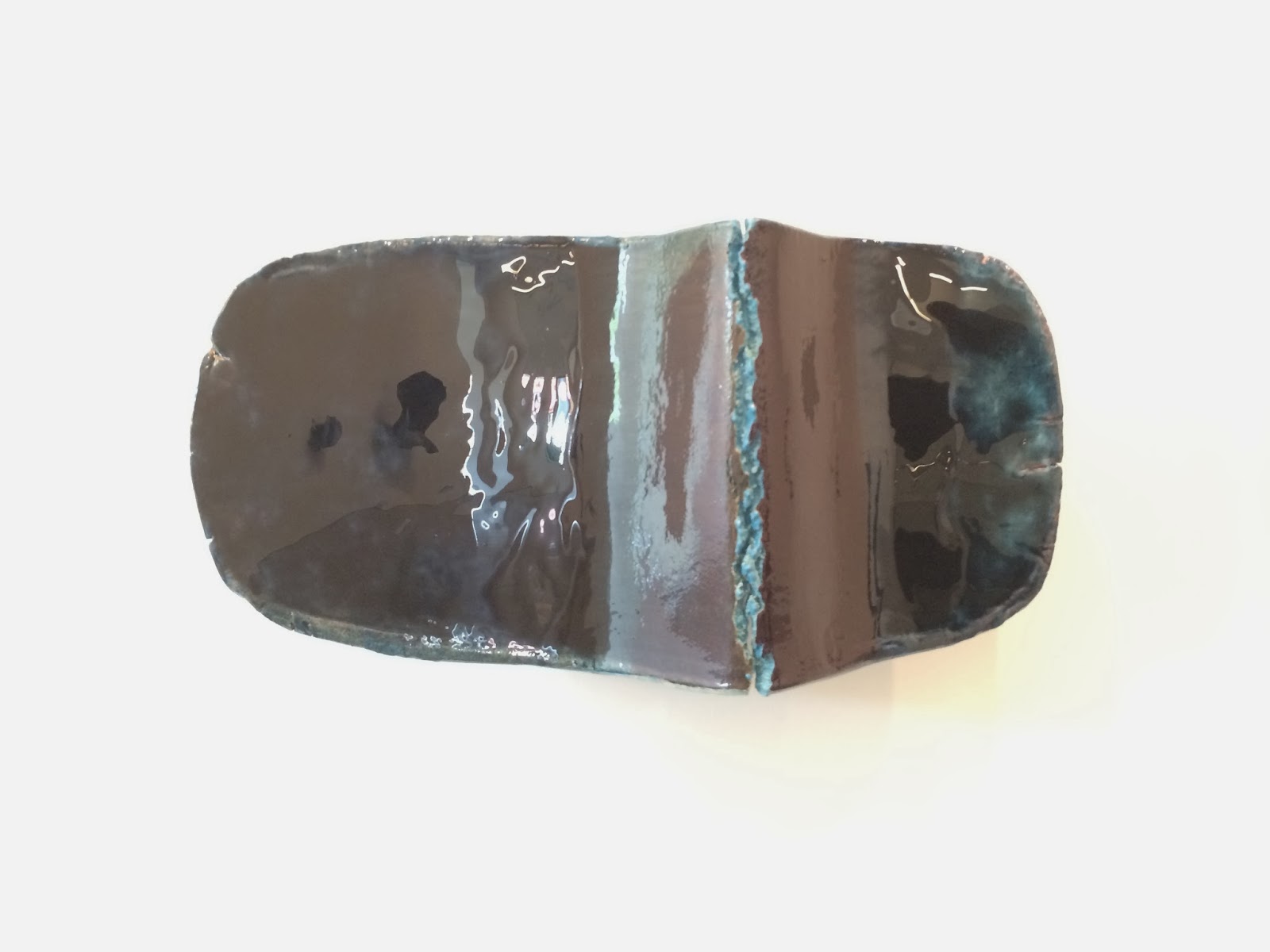
"i (subduction)," 2013
Ceramic, epoxy, and pigment
20 x 39 1/4 x 8 3/4 inches
"X," 2013
Mirror polished cast stainless steel
54 5/8 x 119 7/16 x 94 inches
"110 Fwy, June Gloom and Shrimp Tacos," 2013
Glass, steel, bacertial culture on nutrient agar, 110 FWY, June Gloom, and shrimp tacos
13 1/4 x 13 1/4 x 6 1/4 inches
"Orchid, Buttermilk, Penny," 1987
Cibachrome print
16 x 20 1/4 inches
"Ten Different Brown Liquors at Tropican Motel L.A.," 1987
Cibachrome print
19 1/4 x 12 3/4 inches
"Tropicana Pool Water, Mercury, Guitar Strings at Tropicana Motel, L.A.," 1987/97
Cibachrome print
19 1/4 x 12 3/4
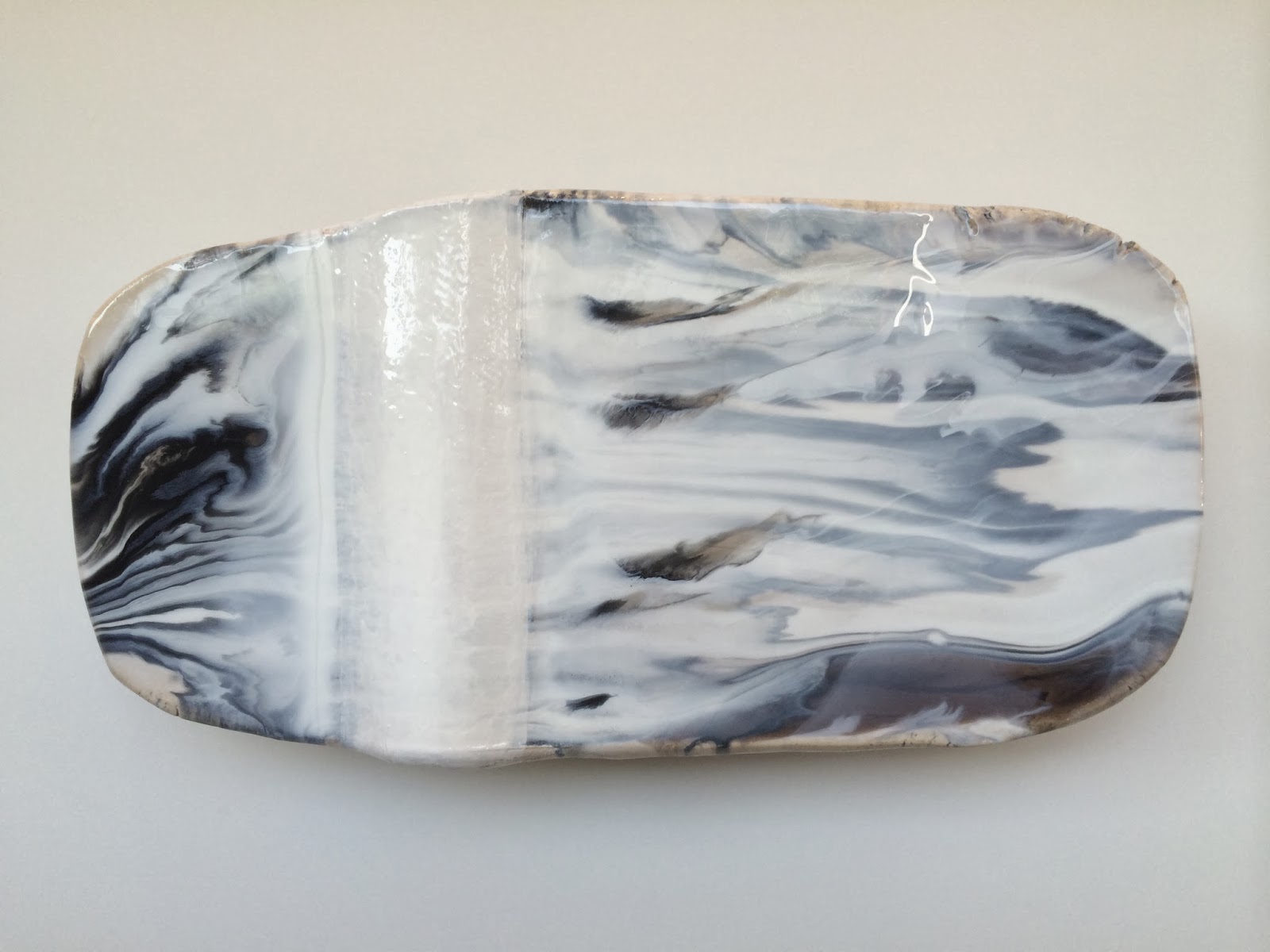
"viii (caesura)," 2013
Ceramic, epoxy, and pigment
"iii (passage)," 2013
Ceramic, epoxy, and pigment
18 3/4 x 37 5/8 x 9 inches
"inflexion," 2013
Ceramic, epoxy, and pigment
18 1/2 x 36 3/4 x 10 1/2 inches
"mantle," 2013
Ceramic, epoxy, and pigment
18 1/4 x 37 1/4 x 6 inches
First Impressions:
Undulating. Elusive. The orange one from before (“Corridor"). The floor. Morphing. Merging. Separating. Dissolving. Non-isolating views. Organic arising. Culture. Viewing movement. Peripatetic. Intersection. Symmetry suggested, but not. Center (balance) and not. Complication of light and dark. Not unlike digital photography dilemma (light contrast). Wall reflective surfaces all. Underneath is light. Exterior darkness. Rough around the edges. Fingernail polish. Broken/Chipped nails. Canvas impressions remain (reveals process and thinness). Difficult to photograph (no Gestalt). Iridesce. Oblique. Lips. Cataclysmic land (body).
To suggest science and its method within an art context is to also to suggest a kind of matter of fact irony to artistic concerns (surface, forms, and psychological effect/affect).
Second Thoughts:
If you’re looking for an image to “land” on with this work, I think that you’re missing the point. This work now, and as I have always seen Larner’s work (Cf. “2000" and “Corridor" as perfect earlier examples), is about the elusive surface generally, the peripatetic experience of looking at art (particularly sculptures (traditionally thought about as balanced from a floor) and also ones on the wall), and about how the rise of culture stems from such interactions between what is enacted by an artist (what it implies metaphorically) and what results, if only momentarily. You only need to take comparisons between the Viewing Room and the remainder of the show to see that Larner’s inquiry persists, at least how I see it.
Language itself now takes greater hold as letters in certain works (the x in inflexion) take shape as titles for sculpture (X). Where the body and the land intersect (vertically and horizontally) can be observed by considering “planchettes” V and VI against one another as much as to other works. The wall works are landscape fragments reasserted by their horizontality and ones from the floor arise, as static forms and as we must engage (dance?) with them. I am pushed around by them and they never resolve for me as image but just so many relative comparisons (again to repeat by referring to earlier work, to art history, to a way we can think about our body and the land, and occasionally, humor, certainly abstract processes all).
This very attempt on my part to look and understand this work in some way seems to the point of the work, a body of work that exceeds expectations by so much that not only is it hard to get a handle on but also because the very scale of the exhibition is more like museum level in quantity (sheer output) and quality (construction and finish). If I don’t return physically to the viewing space of this work before the show closes, it may be a mistake and my own loss. On the other hand, what’s best about this work, is its’ elusiveness, in which case nothing concrete is attained no matter how many viewings. Again, apprehension may not be the point, but rather the pursuit of a rise and fall. Not unlike a flower, don’t you think?
This show is a monster, in all the best ways possible (immanence, emergence, florescence, detumescence, evanescence...).